The weight of an aircraft significantly impacts its performance. Pilots must carefully manage weight by considering payload, fuel load, and operational limits to ensure optimal performance. As weight increases, takeoff distance, climb rate, and fuel consumption also increase.
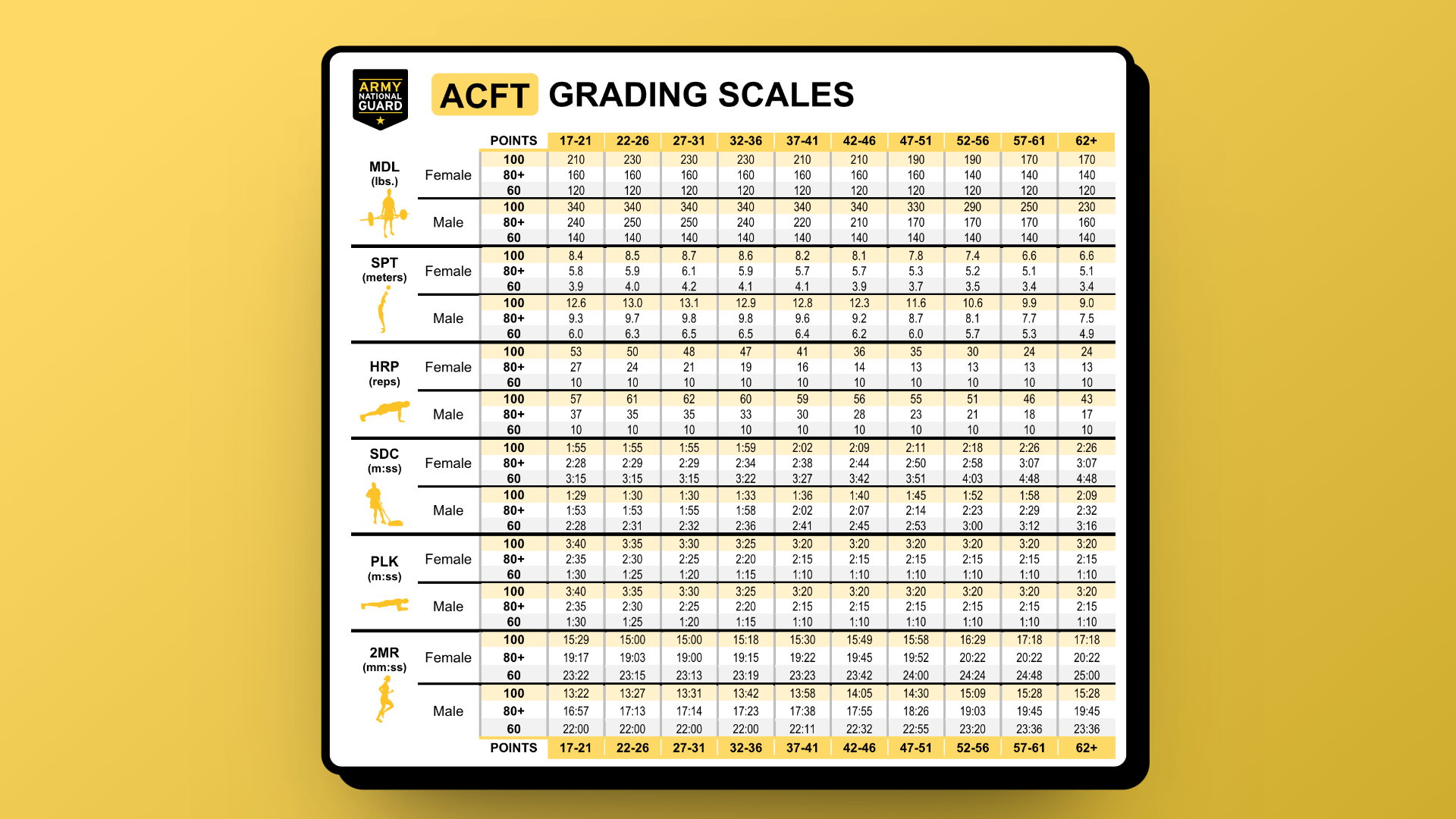
The ACFT scoring system utilizes a tiered approach, with different standards for various age groups and gender categories. This adjustment is intended to ensure that soldiers are evaluated based on their potential rather than a one-size-fits-all standard. Each bracket has its own set of performance standards for each event, which are designed to account for the natural decline in physical performance that occurs with aging. The age groups are typically divided into brackets: 17-21, 22-26, 27-31, 32-36, and 37 and above.
The new test was designed to assess a soldier's physical fitness more holistically, focusing on strength, endurance, agility, and coordination. However, the complexity of scoring each event and the need for accurate calculations posed challenges for soldiers and fitness trainers alike. The ACFT Score Chart Calculator was conceived as a solution to these challenges, aiming to simplify the scoring process and enhance the overall fitness assessment experienc The ACFT was officially implemented in October 2020, replacing the previous Army Physical Fitness Test (APFT).
This adjustment acknowledges that older soldiers may not be able to perform at the same level as their younger counterparts due to factors such as muscle mass decline and recovery time. For example, a soldier in the 22-26 age bracket may need to achieve a deadlift of 340 pounds to score the maximum points, while a soldier in the 37 and above bracket may only need to lift 300 pounds to achieve the same score.
While challenges remain, the overall intent of the ACFT is to promote a culture of fitness and readiness within the Army, ensuring that all soldiers are prepared to meet the demands of their roles. The ACFT age group standards and scoring adjustments by bracket represent a significant evolution in how the Army assesses physical fitness. By recognizing the impact of age and gender on performance, the Army aims to create a more equitable testing environment that encourages all soldiers to strive for improvement. As the Army continues to refine and assess the effectiveness of the ACFT, it remains committed to fostering an inclusive and supportive environment for all its personnel, ultimately enhancing the overall combat readiness of the force.
The Army's goal was to develop a more comprehensive evaluation that reflects the physical demands of combat and military operations. However, the Army recognized that physical capabilities can vary significantly with age and gender, necessitating a scoring system that accommodates these differences. The ACFT was officially implemented in 2020 after
extensive research and
testing. The test is designed to assess strength, endurance, agility, and overall fitness, ensuring that soldiers are prepared for the rigors of their roles.
The aerodynamic design of an aircraft plays a crucial role in its performance. Factors such as wing shape, fuselage design, and control surfaces affect drag, lift, and overall efficiency. Aircraft with better aerodynamic properties tend to have improved performance characteristics, allowing for higher speeds and better fuel efficiency.
Each event targets specific physical attributes such as strength, endurance, and agility, providing a holistic view of a soldier's fitness level. The ACFT consists of six events that measure different aspects of physical fitness: the deadlift, standing power throw, hand-release push-up, sprint-drag-carry, leg tuck, and two-mile run.
Development and Testing: The development team utilized programming languages such as JavaScript and Python to build the calculator. Rigorous testing was conducted to ensure accuracy in scoring and to identify any bugs or issues. Feedback from test users was incorporated to refine the tool furthe
Time Efficiency: The real-time scoring feature saves time during training sessions, allowing soldiers to quickly assess their performance without the need for manual calculations. This efficiency enables more time for actual training and preparation.
The minimum score requirement has also encouraged soldiers to adopt healthier lifestyles outside of formal training sessions. This holistic approach to fitness not only benefits individual soldiers but also contributes to the readiness of the entire unit. Many have begun to prioritize nutrition, recovery, and overall wellness as part of their preparation for the
acft score calc.
This approach not only fosters a more positive environment for physical training but also encourages soldiers to focus on their personal growth and development. By recognizing the diverse capabilities of soldiers, the ACFT aims to motivate individuals to improve their fitness levels without discouraging those who may struggle to meet more stringent standards. The implementation of age and gender-based scoring adjustments has been a crucial step towards promoting fairness and inclusivity within the Army.
