Introduction
GHK-Cu peptide, a naturally occurring copper complex, has garnered significant attention in the fields of dermatology, wound healing, and regenerative medicine due to its remarkable biological properties. This peptide, which consists of three amino acids—glycine, histidine, and lysine—combined with copper ions, exhibits a range of beneficial effects, including promoting collagen synthesis, enhancing tissue repair, and exhibiting anti-inflammatory properties. This report aims to provide a detailed overview of GHK-Cu peptide, including its structure, mechanisms of action, therapeutic applications, and potential future directions for research.
1. Structure and Composition of GHK-Cu Peptide
The GHK-Cu peptide is a tripeptide composed of the amino acids glycine (G), histidine (H), and lysine (K). Its chemical structure can be represented as Gly-His-Lys, with the copper ion (Cu²⁺) coordinating to the nitrogen atoms of the histidine and lysine residues. This coordination is essential for the peptide's biological activity, as the presence of copper significantly enhances its therapeutic effects.
The peptide was first isolated from human plasma in the early 1970s and has since been identified as a key player in various physiological processes. The GHK-Cu complex is known for its stability, allowing it to be effectively utilized in various formulations for therapeutic purposes.
2. Mechanisms of Action
GHK-Cu exerts its effects through multiple mechanisms, which can be categorized into the following key areas:
2.1. Promotion of Collagen Synthesis
One of the most significant roles of GHK-Cu is its ability to stimulate collagen production in fibroblasts. Collagen is a vital structural protein that provides strength and elasticity to the skin and other tissues. GHK-Cu enhances the synthesis of collagen types I and III, which are critical for skin health and wound healing. This promotion of collagen synthesis is mediated by the activation of specific genes involved in collagen production and the upregulation of growth factors such as transforming growth factor-beta (TGF-β).
2.2. Wound Healing and Tissue Repair
GHK-Cu has been shown to accelerate wound healing by promoting angiogenesis, the formation of new blood vessels, and enhancing the migration and proliferation of keratinocytes and fibroblasts. The peptide stimulates the release of various growth factors and cytokines, including fibroblast growth factor (FGF), vascular endothelial growth factor (VEGF), and platelet-derived growth factor (PDGF), which play crucial roles in tissue repair and regeneration.
2.3. Anti-Inflammatory Effects
The anti-inflammatory properties of GHK-Cu are attributed to its ability to modulate the immune response. The peptide has been shown to reduce the production of pro-inflammatory cytokines, such as interleukin-6 (IL-6) and tumor necrosis factor-alpha (TNF-α), while promoting the secretion of anti-inflammatory cytokines. This dual action helps to create a favorable environment for healing and tissue regeneration.
2.4. Antioxidant Activity
GHK-Cu exhibits antioxidant properties by scavenging free radicals and reducing oxidative stress. This action is particularly important in preventing cellular damage and promoting longevity. The peptide also enhances the expression of antioxidant enzymes, such as superoxide dismutase (SOD) and catalase, contributing to its protective effects against oxidative damage.
3. Therapeutic Applications
Given its diverse biological activities, GHK-Cu has been explored for various therapeutic applications, including:
3.1. Dermatology and Skincare
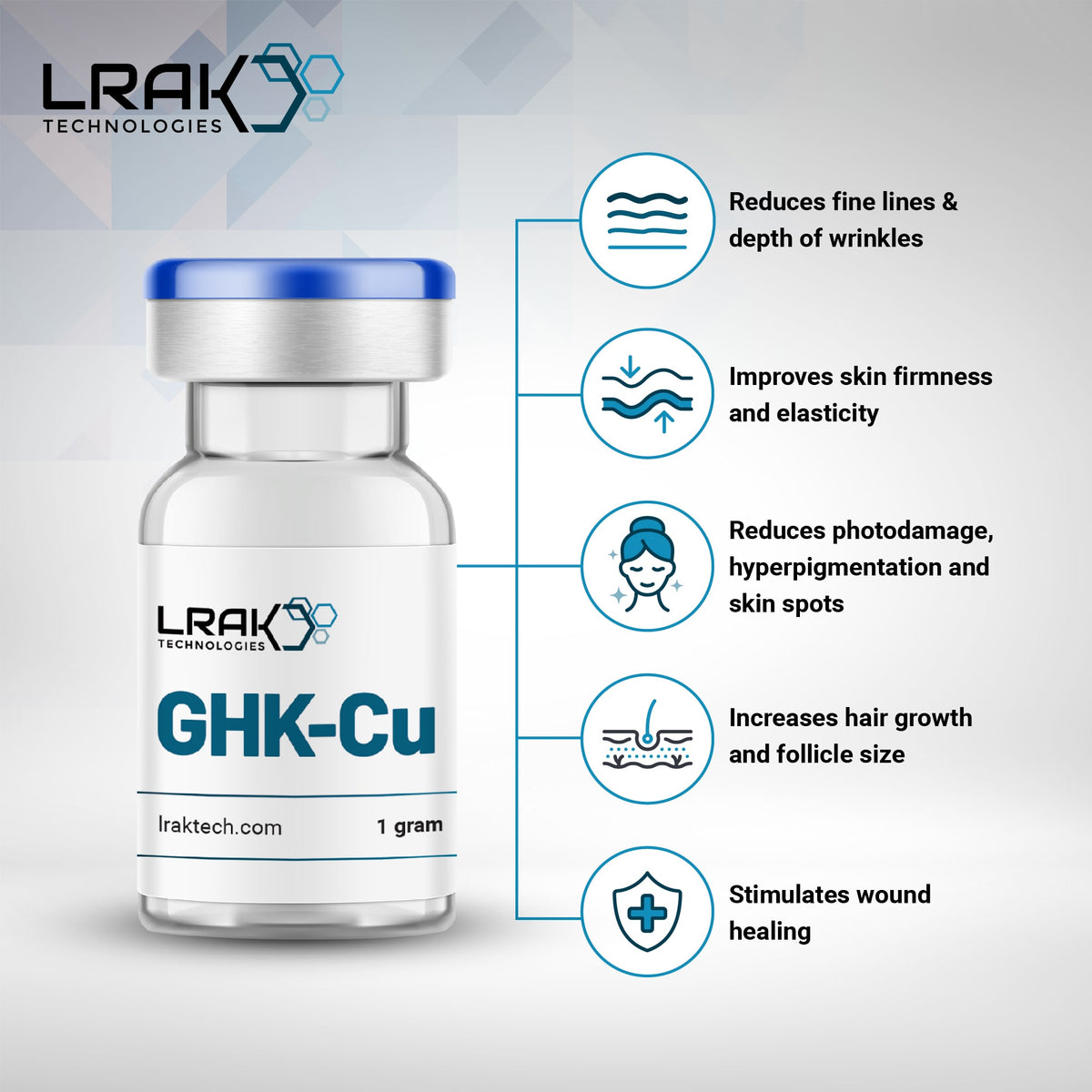
GHK-Cu is widely used in cosmetic formulations due to its ability to improve skin appearance and texture. It is known to reduce fine lines, wrinkles, and hyperpigmentation, making it a popular ingredient in anti-aging products. Clinical studies have demonstrated that topical application of GHK-Cu can enhance skin elasticity and hydration, leading to a more youthful appearance.
3.2. Wound Healing
The peptide's potent wound healing properties have led to its incorporation into treatments for acute and chronic wounds, burns, and surgical incisions. Clinical trials have shown that GHK-Cu can significantly reduce healing time and improve the quality of healed tissue, making it a valuable tool in wound management.
3.3. Hair Restoration
GHK-Cu has been investigated for its potential in promoting hair growth and preventing hair loss. Studies have indicated that the peptide can stimulate hair follicle growth and prolong the anagen (growth) phase of the hair cycle. This has led to its inclusion in topical formulations aimed at treating androgenetic alopecia and other forms of hair loss.
3.4. Regenerative Medicine
The regenerative properties of GHK-Cu have prompted research into its applications in tissue engineering and regenerative medicine. The peptide has been shown to enhance the proliferation and differentiation of stem cells, making it a promising candidate for developing therapies aimed at repairing damaged tissues and organs.
4. Safety and Side Effects
GHK-Cu is generally considered safe for topical use, with a low risk of adverse effects. Clinical studies have reported minimal irritation or allergic reactions in individuals using formulations containing GHK-Cu. However, as with any therapeutic agent, individual responses may vary, and it is essential to conduct further research to fully understand its safety profile, particularly in long-term use and in specific populations.
5. Future Directions and Research Opportunities
As research continues to uncover the multifaceted roles of GHK-Cu, several future directions and opportunities for investigation emerge:
5.1. Mechanistic Studies
Further studies are needed to elucidate the precise molecular mechanisms underlying the various biological effects of GHK-Cu. Understanding the signaling pathways and gene expression changes induced by the peptide will provide valuable insights into its therapeutic potential.
5.2. Clinical Trials
While there is promising evidence supporting the efficacy of GHK-Cu in various applications, more extensive clinical trials are needed to validate its effectiveness across different populations and conditions. Randomized controlled trials will help establish optimal dosages, formulations, and treatment regimens.
5.3. Combination Therapies
Exploring the synergistic effects of GHK-Cu with other therapeutic agents may enhance its efficacy in treating specific conditions. Combination therapies could lead to more comprehensive treatment approaches, particularly in regenerative medicine and dermatology.
5.4. Novel Formulations
The development of innovative formulations that enhance the stability and bioavailability of GHK-Cu could improve its therapeutic outcomes. Nanotechnology and advanced delivery systems may facilitate better penetration and sustained release of the peptide in target tissues.
Conclusion
GHK-Cu peptide represents a promising therapeutic agent with a diverse range of biological activities, particularly in the fields of dermatology, wound healing, and regenerative medicine.